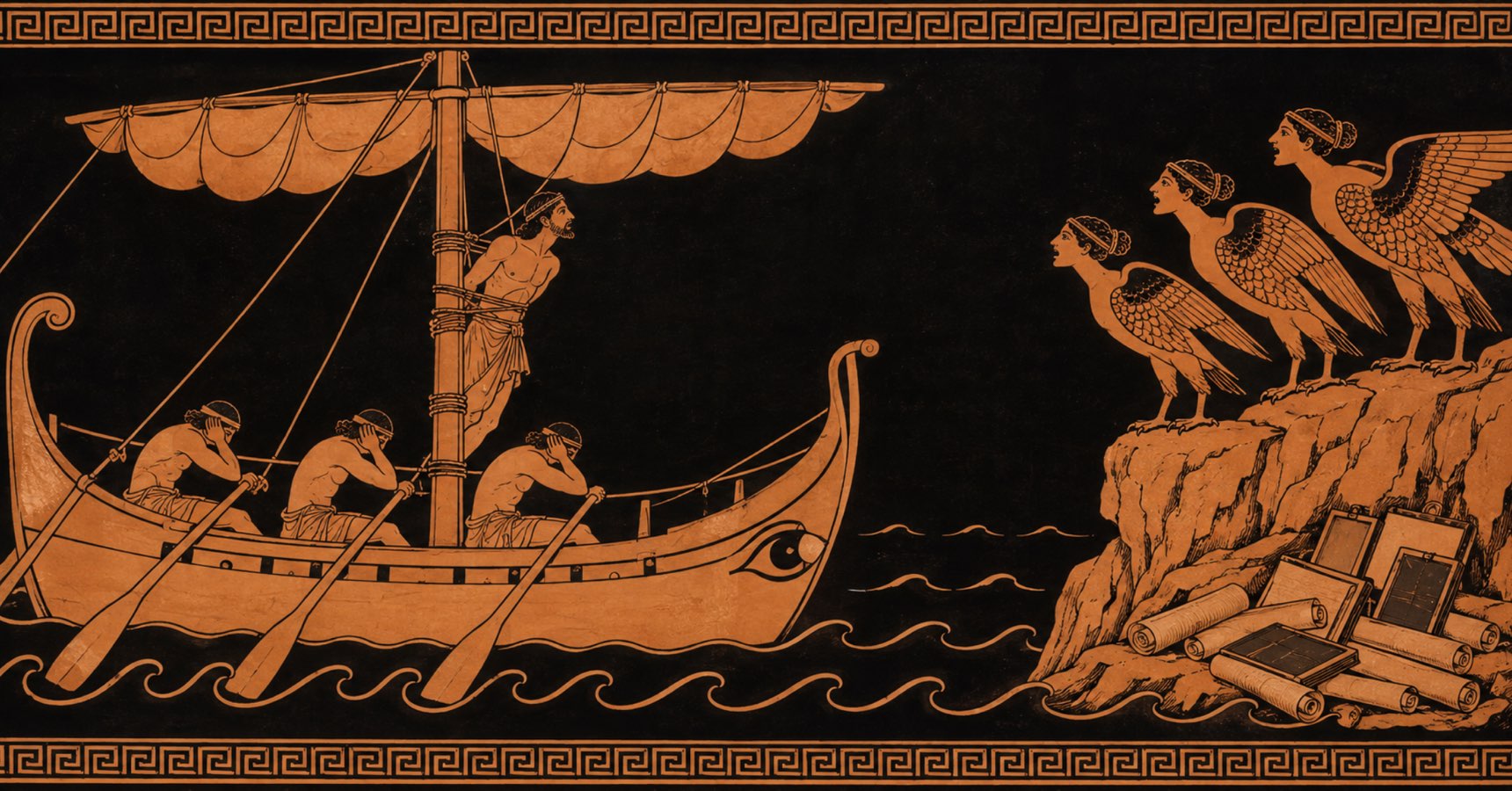
The readout nobody acts on
The readout is good. The model is clean, the method holds up, and the finding is hard to argue with: the channel the team spent the year building isn't pulling its weight. Nobody in the room disputes it. Analytics built the model, the channel lead owns the budget, finance has its own idea of what return means, and whoever could actually move the money is in another meeting. Everyone agrees the evidence is sound, and the plan carries forward anyway.1 The following year the company buys a better model.
Nothing went wrong with the measurement in that room. Nobody had been bound to anything ahead of time, so the numbers became one more opinion, and the plan that already had momentum won.
What the Sirens were selling
Anyone who saw Christopher Nolan's The Odyssey this summer remembers the mast.2 What sticks less is what the Sirens were actually offering. In Homer, the song isn't a promise of pleasure. It's a promise of knowledge. The Sirens say they know everything the Greeks and Trojans suffered at Troy, and everything that comes to pass on the earth.3 The sailors who stopped for that song didn't die of ignorance. They stayed to hear the rest of it and never sailed on.
That's the wreck worth worrying about. A company that buys a better model every year, and waits for the next readout before it moves, is doing the same thing. It keeps listening and never gets back to the oars.
Odysseus had been warned, and he didn't try to out-think the song. He set up the decision before he heard it. The crew plugged their ears with wax. He had himself bound upright where he could hear everything, with orders that if he begged to be let loose, they should tie him tighter. When the moment came he begged, and two of his men got up and added more rope.4 He heard all of it, and the ship kept moving.
The song is getting louder
Most of this year's measurement debate is about making the song more accurate, with cleaner data on one side and better-run measurement teams on the other.5 Both are worth doing. Neither would have changed what happened in that review.
AI raises the stakes. It produces more readouts, faster, and numbers that refresh constantly feel more authoritative than they are.6 Media buying is also starting to move at machine speed while the evidence still arrives quarterly.7 When nobody is bound to act on a result, the decision still gets made. The buying system makes it, by chasing whatever it was set up to optimize, which is usually the fastest signal rather than the right one.
Building the mast
The mast is a rule you agree to before the study runs. A simple one reads like this. If a channel's incremental return falls below an agreed threshold for two reads in a row, money moves at the next planning checkpoint. Analytics produces the read, someone checks that it isn't a blip, and you have already said you will sign off.8 The argument happens once, when the rule is written, instead of every quarter.
It doesn't have to start that big. On a beverage account a few years ago, we wrote learning agendas into the campaign briefing process, so each brand team had to say up front what it wanted a campaign to teach it before anything ran. That's a small mast. It doesn't move money by itself. It does tie a team to a question while everyone is still clear-headed, and that habit is what a budget rule depends on.
It's also worth being honest about who gets tied down. Odysseus was the one who wanted to hear the song, so he was the one bound, and the rope went to someone else. In a marketing organization that's usually the budget holder. You are the person most likely to ask for one more read when the numbers turn against a channel you care about, which is exactly why the call should be made before you hear them, with someone else holding you to it.
A few questions will tell you whether you have a mast or just better ears. What result would make you move money out of a channel you care about, and have you said so before the numbers arrived? Who have you given permission to hold you to it? When did evidence last change one of your budgets in the middle of a cycle? If you can't remember the last time, another model won't help.
Odysseus heard everything the Sirens had to offer and still made it home. He wasn't smarter than the sailors on the rocks. He had decided what he would do before the song started.